
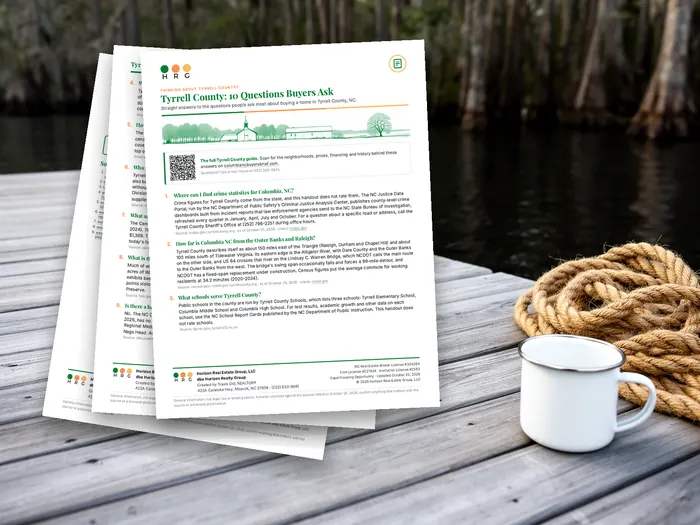
Why Tyrrell County Exists: The 1729 Carve-Out

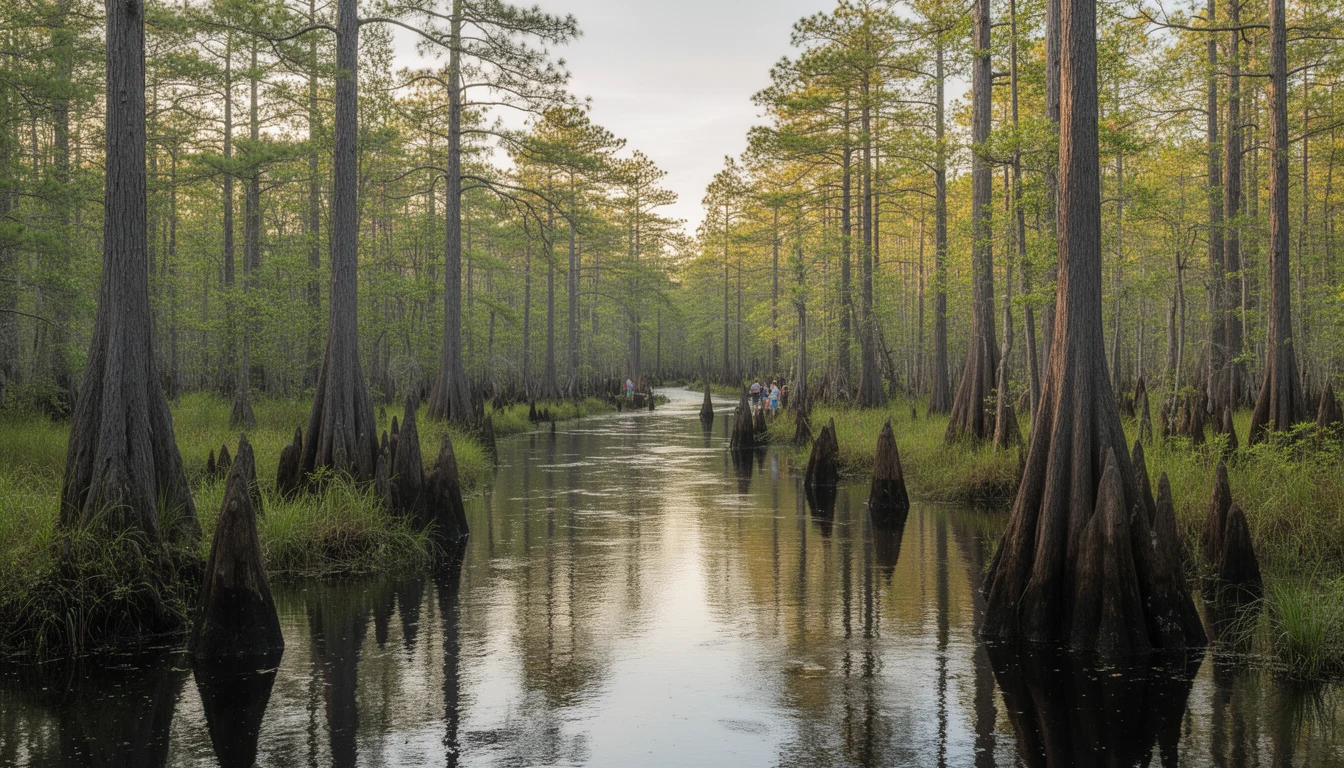
In this post
Cross the Scuppernong River on US-64 into Columbia and the first landmark you pass is the courthouse: a brick building from 1903 sitting on a lawn a few blocks from the water. Behind it the river runs dark with tannin, the air smells of mud and cypress, and by mid-afternoon the cicadas own the place. That one courthouse is the entire county seat. And the county it serves was born out of a boundary argument that started in 1729 and took more than a century to settle.
A County Carved Out of Four Precincts
Tyrrell County was established in 1729, formed from portions of Chowan, Bertie, Currituck, and Pasquotank, the old Albemarle precincts where English settlement first took root along the sound. The colonial assembly named it for Sir John Tyrrell, one of the Lords Proprietors who held the Carolina colony under charter from the Crown.
At creation it was a frontier of water more than land. Settlement hugged the sound shore and the banks of the Scuppernong, and the boundaries kept moving. Washington County was split from Tyrrell’s western territory in 1799, and Dare County was later formed from the eastern end. What stayed behind was the wettest, wildest heart of the Albemarle-Pamlico peninsula, and it has stayed that way ever since.
The Seat That Took a Century to Settle
For the first decades the county did its business at Backlanding, the seat from 1774. In 1793 the settlement on the east bank of the Scuppernong was incorporated as Elizabeth Town. In 1799 the commissioners picked it as the new seat, and on July 28, 1800 the first court convened there.
Then the rename, and this is where the records genuinely disagree. NCpedia and the town of Columbia date the change from Elizabeth Town to Columbia in 1801. ECU’s county history dates it to 1810, citing growing confusion with another Elizabethtown in North Carolina. Both years are in the record, so both belong in the telling. What nobody disputes is the outcome: Columbia became the seat, and it is still the only incorporated town in the county.
Why the Seat Story Still Matters When You Buy
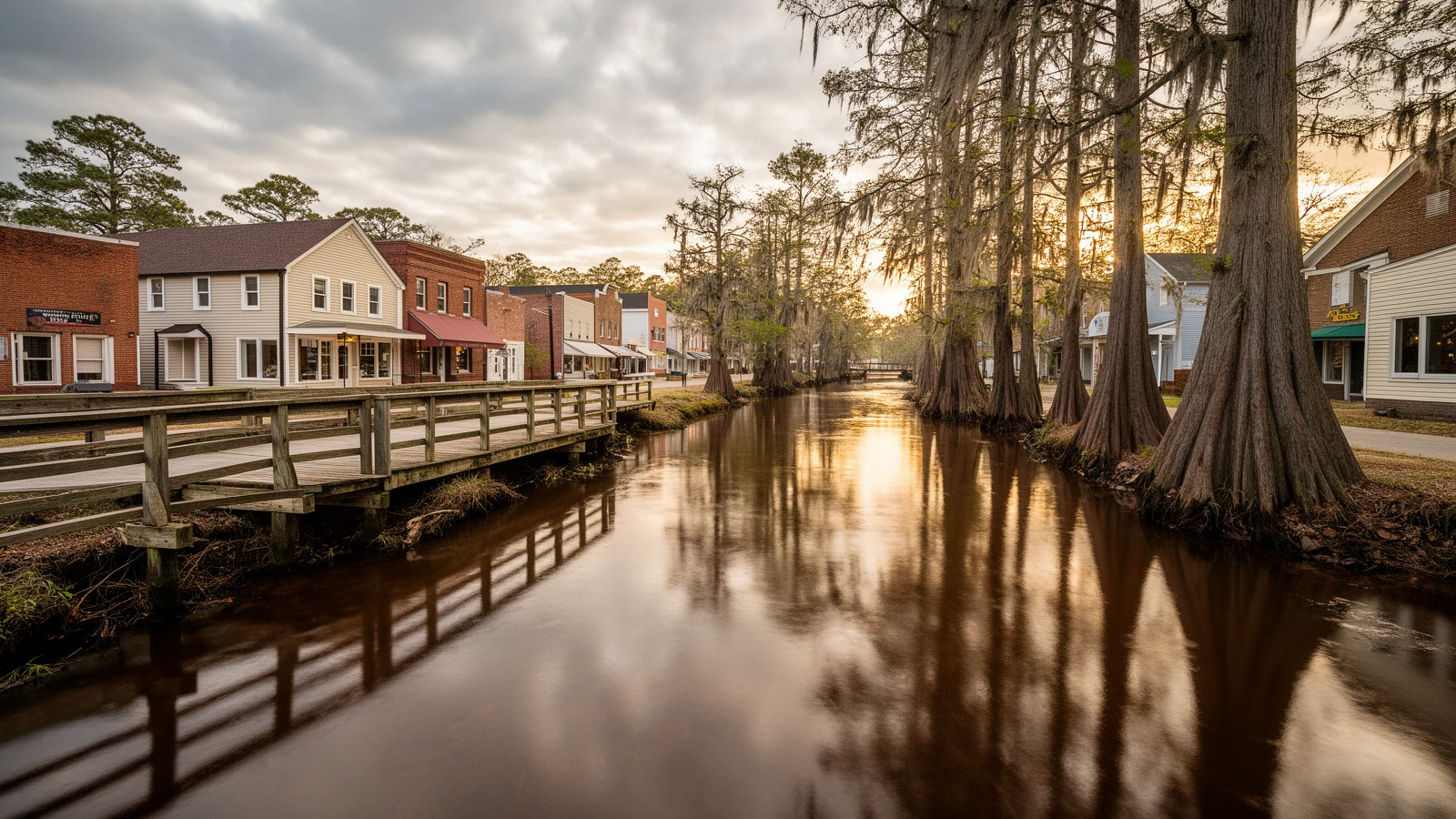
That history is not decoration. It explains the practical shape of a Tyrrell County purchase today.
The records live in one small building. The register of deeds, the county offices, the plat books and deed indexes all sit in that courthouse complex. A title search here is not a trek across a county campus; it is one building, a small staff, and books they know by heart. For buyers working through old metes-and-bounds descriptions, that concentration is an advantage.
The county stayed small on purpose, sort of. Tyrrell is North Carolina’s least populous county, 3,245 people at the 2020 census, spread across roughly 597 square miles of which about a third is water. Columbia counted 610 residents in 2020, down from 891 in 2010. The pocosins did much of that work: peat soil that resists the plow, the road grader, and the developer alike.
The trade is real and worth naming. There is no hospital in the county; the nearest emergency rooms run about 25 minutes west to Washington Regional in Plymouth, about 40 minutes to ECU Health Chowan in Edenton, and about 50 minutes east to The Outer Banks Hospital in Nags Head. Retail is thin by design. In exchange you get a price per acre that Dare County buyers can only dream about, water access that does not require a gated community, and a courthouse where you can chase a deed in an afternoon.
The Bottom Line
Tyrrell County is affordable and uncrowded for a specific reason: the land itself made it hard to develop, and the people who kept coming anyway built their one town around a river and a courthouse. When you buy here you are buying a place whose boundaries were argued over for a century, and whose records still sit in one small building where somebody knows the books.
That is not a drawback. It is the reason the math works.
The full story, with sources, lives on the Tyrrell County history page. If you are looking at land here and want to know what the records actually show on a specific parcel, call me at (252) 202-4945. I will tell you what to pull and where to look, and I will tell you honestly when the history makes a parcel harder than it looks.
Keep reading
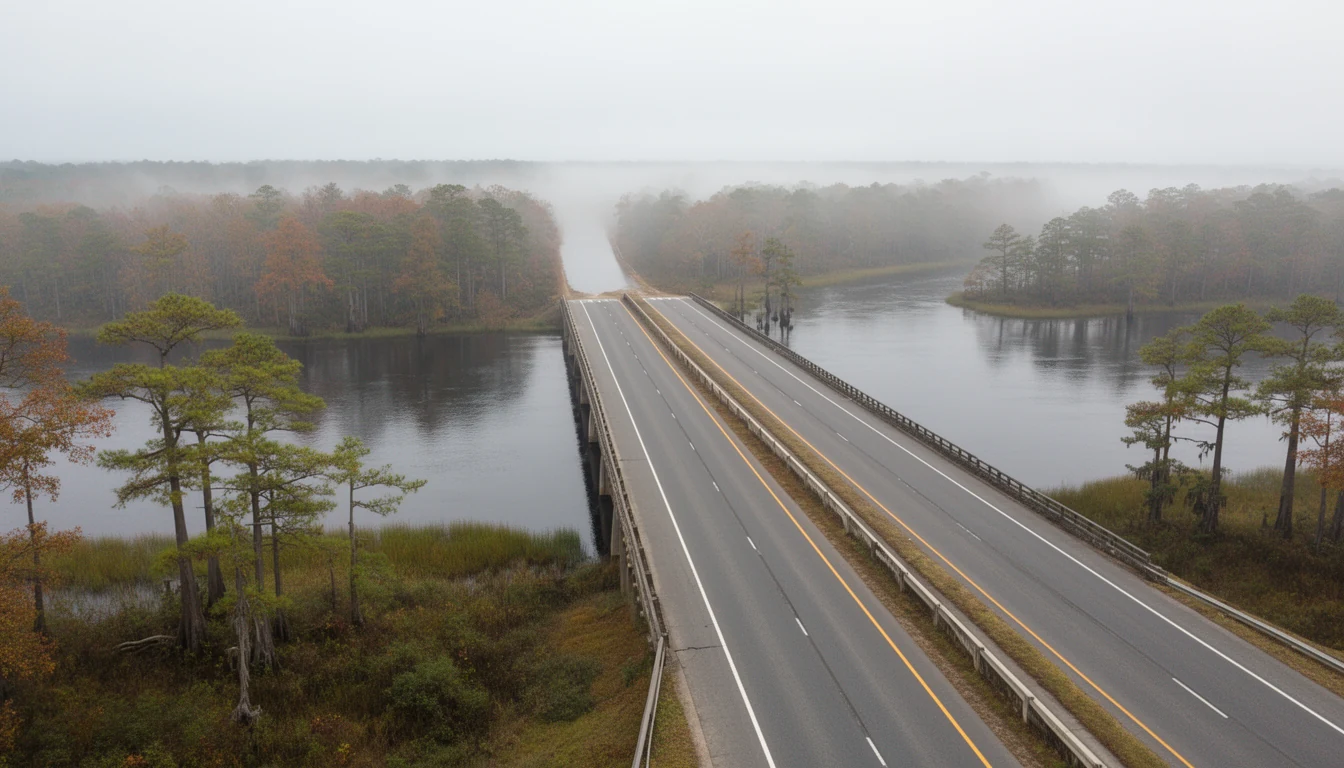
The Lindsay C. Warren Bridge: Tyrrell Turns East
The 1962 Lindsay C. Warren Bridge ended Tyrrell County's ferry era and turned it east toward the Outer Banks. What that shift means for land buyers.
The Ditches That Drained Tyrrell County
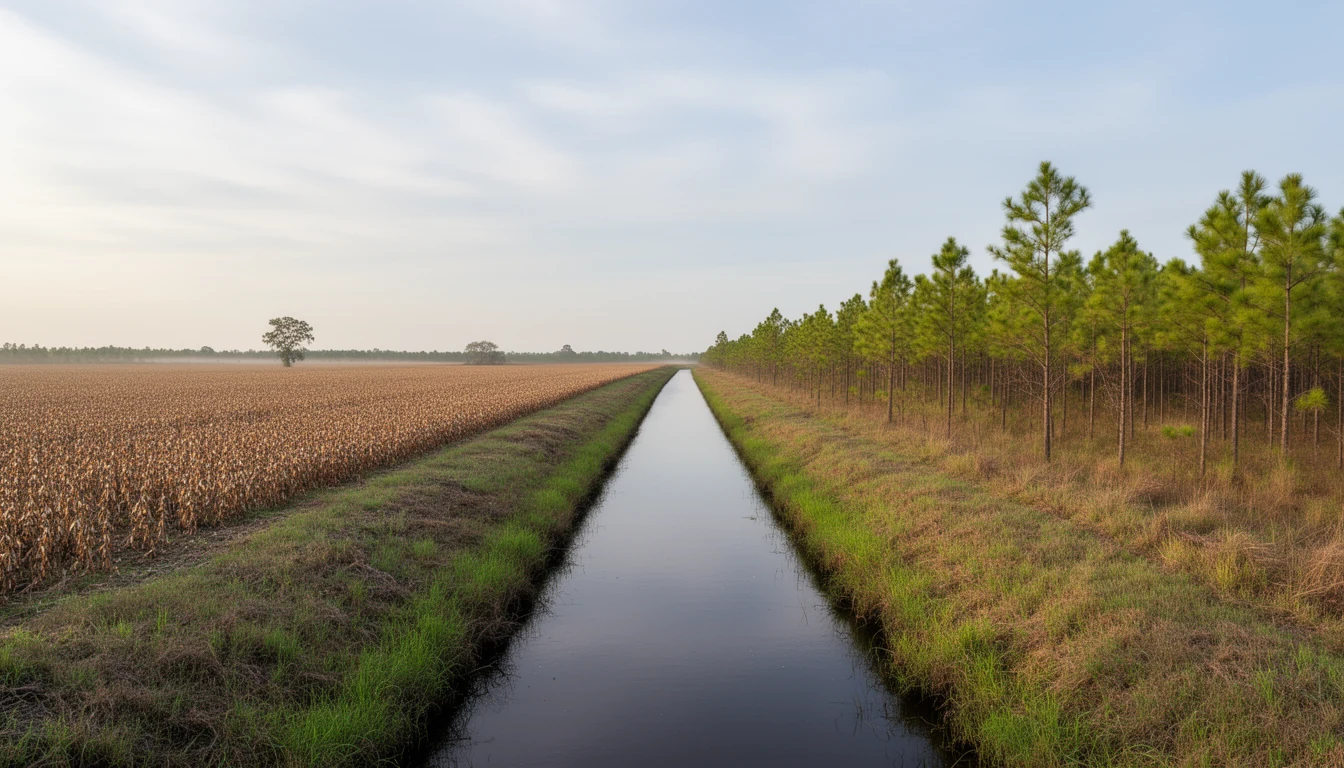
Before the farms came the ditches: the canals that drained Tyrrell County pocosins, from 1787 plantation cuts to the refuge rewetting them today.
Steamboats on the Scuppernong: Columbia's Riverport Era
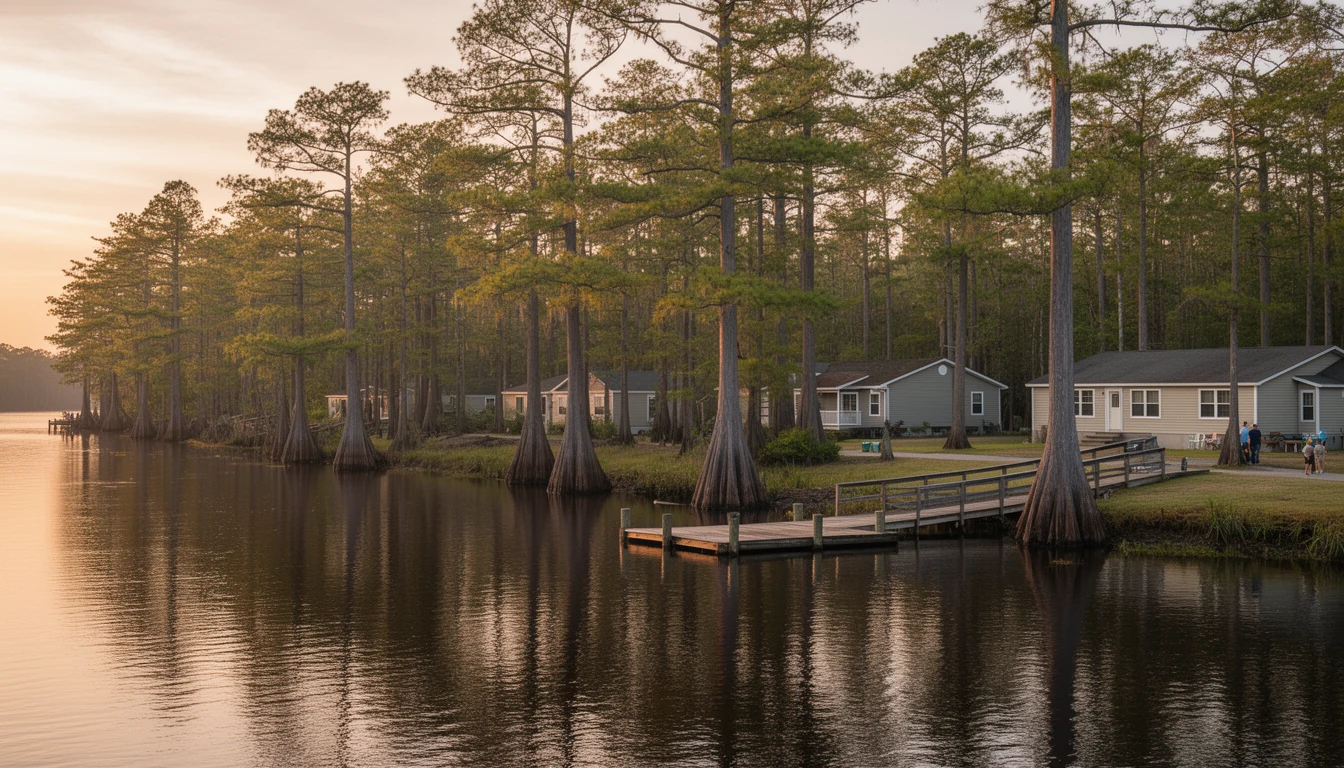
Before US-64, steamboats carried Tyrrell County's timber, fish, and mail on the Scuppernong. Columbia's riverport era, and what it tells buyers today.