

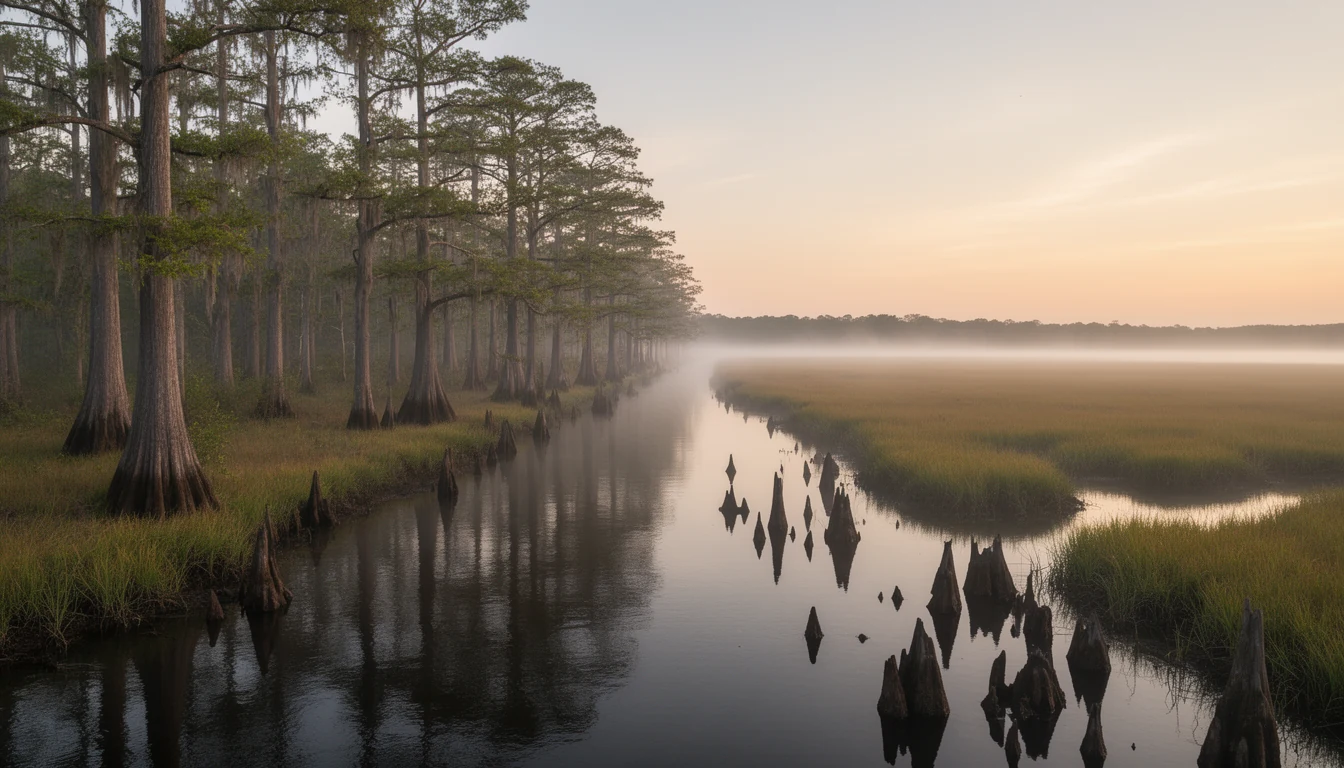
Stand at the foot of the US-64 bridge in Columbia and look west. The Scuppernong is the color of steeped tea, with cypress knees breaking the shallows and a heron working the far bank. Turn around and you are in a town of 610 people with a courthouse, a grocery store, and a boardwalk.
That is one of Tyrrell County’s three waters. The other two sit past the edges of town: the Alligator River along the county’s eastern line, and the Albemarle Sound along the entire northern shore.
The Census Bureau counts 597 square miles of county here, and 206 of them are water. More than a third of the place is not land, which is the single best explanation for how the land market here behaves. Buyers do not shop Tyrrell by neighborhood. They shop it by water, and each of the three comes with its own kind of frontage, its own access, and its own list of things to check before you write an offer.
1. The Scuppernong: the river the town is built on
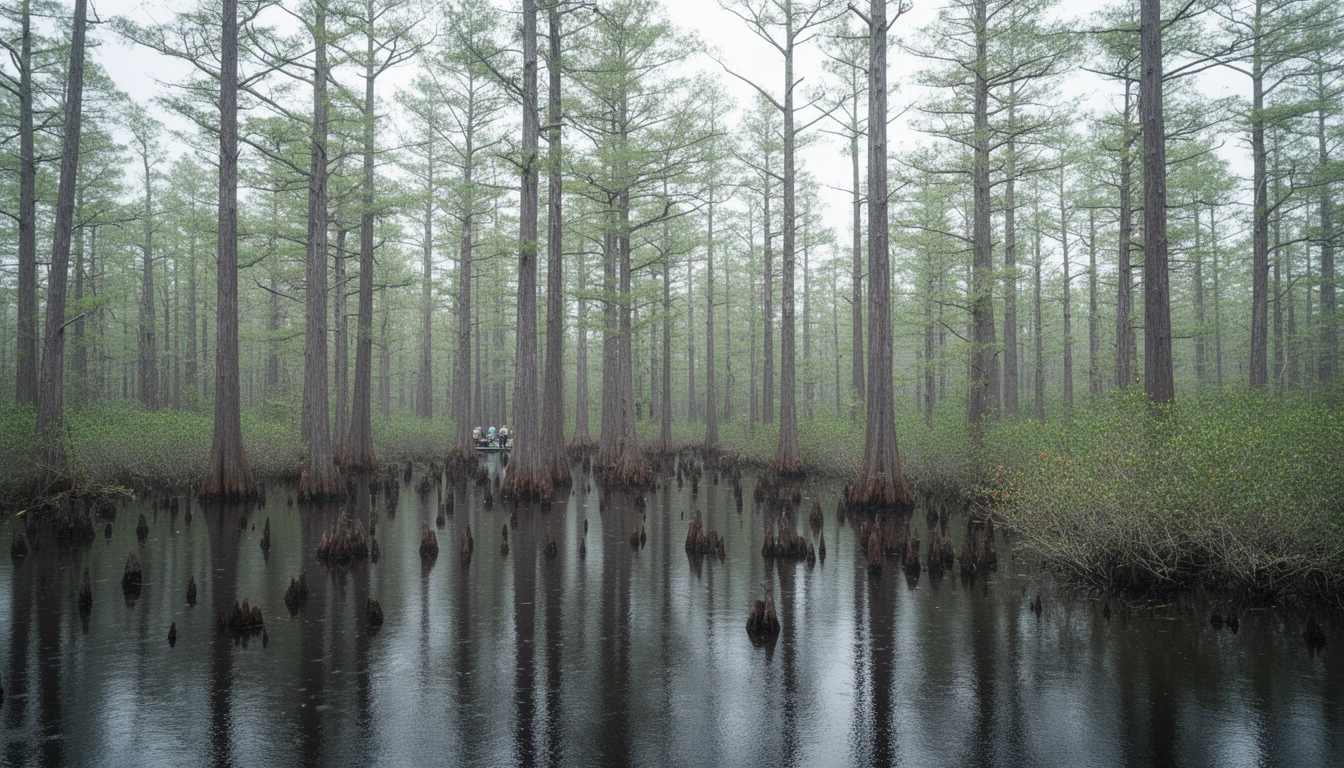
The Scuppernong is a blackwater river that drains northern Washington and Tyrrell counties on its way to the Albemarle Sound. The color comes from the tannin of the swamps it runs out of, which is also why the cypress grows the way it does along the banks. Lake Phelps, up in Pettigrew State Park, drains into it.
The river gave its name to the scuppernong grape, and that grape has been North Carolina’s official state fruit since 2001 (Session Laws 2001, c. 488).
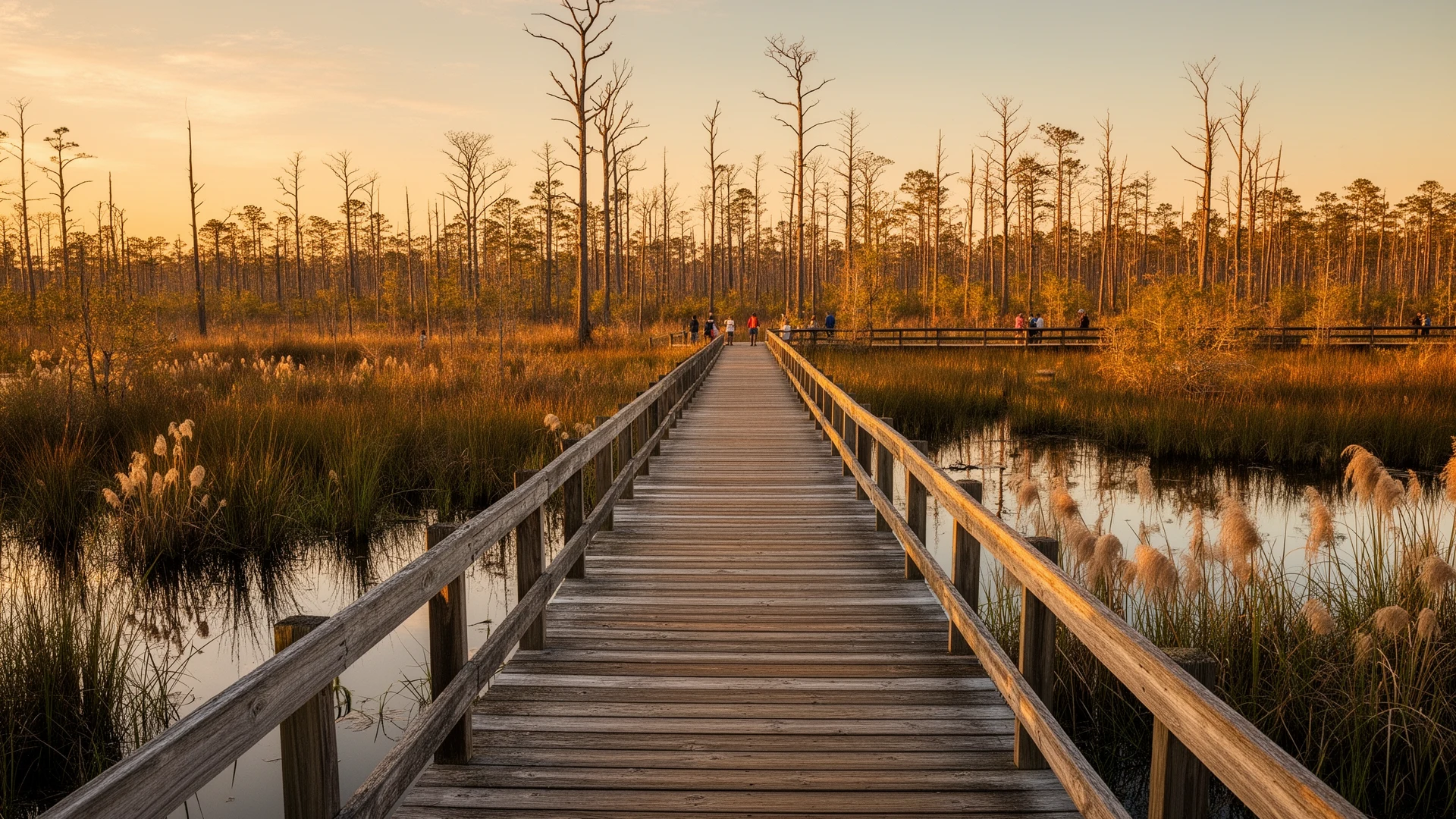
Columbia exists because of this water. The town sits where US-64 crosses the river, downtown ends at the riverfront, and the town’s best public asset is a 0.75-mile boardwalk loop that starts behind the Walter B. Jones, Sr. Center for the Sounds, runs through cypress swamp, and lands you back in downtown. It has been a National Recreation Trail since 2005 and is managed by Pocosin Lakes National Wildlife Refuge.
The river gets a festival too. The Scuppernong River Festival takes over downtown on the second Saturday in October and pulls 8,000 to 10,000 people into a town of 610. This year that is October 10.
For a buyer, the Scuppernong is the only water in Tyrrell with a town on it. You can own a modest house or a lot inside the town limits with river frontage behind it and walk to the grocery store, the post office, and the courthouse. In town you also get municipal water, which matters more than people expect the first time they price a well.
The trade is real. This is a narrow, winding, slow-moving river rather than a cruising waterway, so the boating here is small boats and paddle craft. Public access is the N.C. Wildlife Resources Commission ramp at the end of Boat Ramp Road off US-64, where locals launch a jon boat and work the cypress edges. The ground nearest the water is bottomland: expect seasonal wet, marsh edges, and flood zones on the lowest lots. Outside the town limits you are back on a well and a septic system, and the soil question comes before the view. The soil and water tables chapter walks through why.
2. The Alligator River: the county’s eastern edge
NCpedia’s county profile puts it plainly: Tyrrell is bordered to the east by the intracoastal waters of the Alligator River. The river separates Tyrrell from Dare County and empties into the Albemarle Sound.
It is also a working corridor. A canal of roughly 21 miles links the Alligator westward to the Pungo River, which means a boat launched in Tyrrell can run the Intracoastal Waterway north toward the Chesapeake or south toward the Pamlico without ever going offshore. The state designates the river Outstanding Resource Waters: wooded swamps and pocosins on both banks, and one of the coast’s important spawning reaches for fish that run between fresh and salt water.
Everything that crosses this water crosses on the Lindsay C. Warren Bridge, where US-64 spans 2.8 miles of river on a swing span that opens for boat traffic. NCDOT started building a fixed-span replacement in February 2025, with completion anticipated around the end of 2029. Until it opens, bridge openings and construction stay in the daily math for anyone commuting east to Dare County.
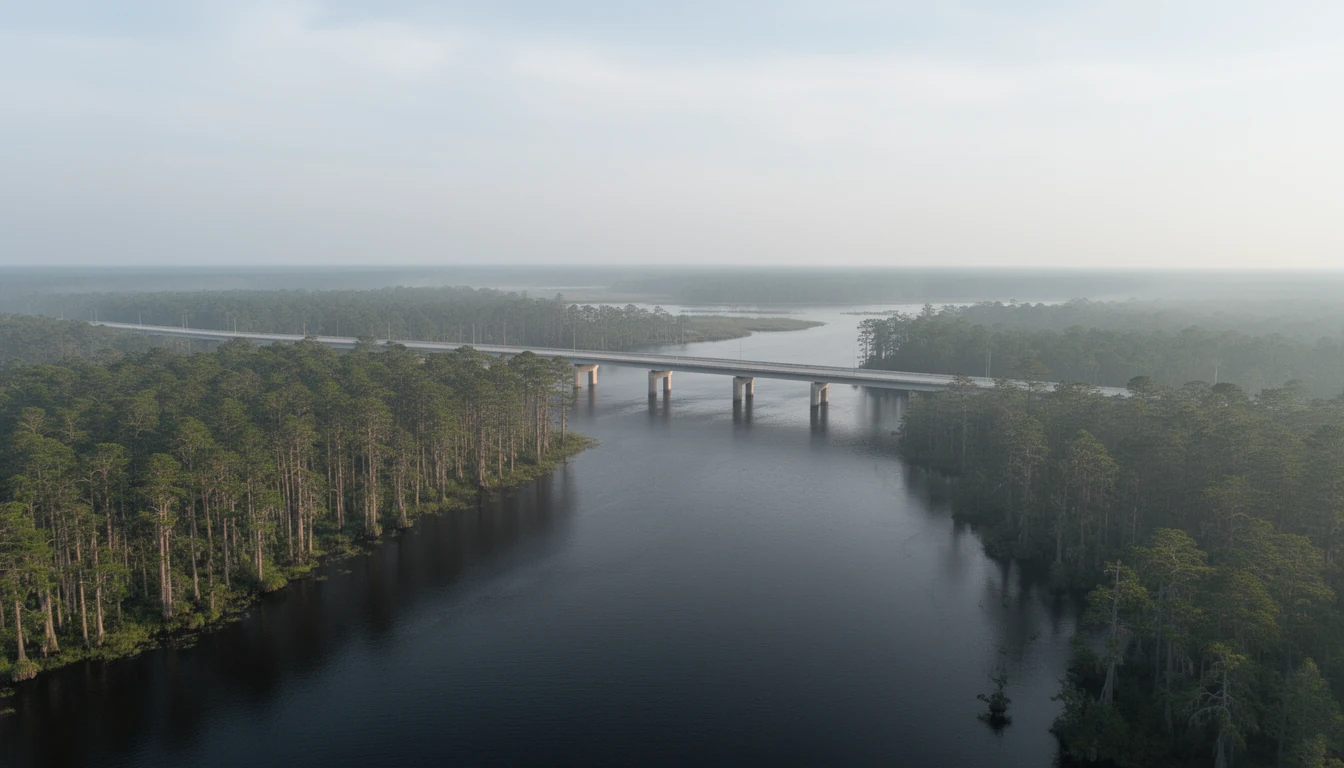
Public access on this side comes from the landings: Cherry Ridge Landing and Gum Neck Landing on the river itself, and Frying Pan Landing a few miles downriver near the inlet said to be shaped like a frying pan.
What that means for a buyer is this. The Alligator side is the county’s big-water side, the shortest run to the sound and the ICW, and the ground that anglers and duck hunters look at first. It is also the wettest. The shoreline is swamp and pocosin almost everywhere, so the rare dry ridge is what makes a parcel buildable. And the wooded ground across the river is refuge land: Alligator River National Wildlife Refuge covers 152,000 acres in Dare and Hyde counties, on the far side of the water.
3. The Albemarle Sound: the northern shore
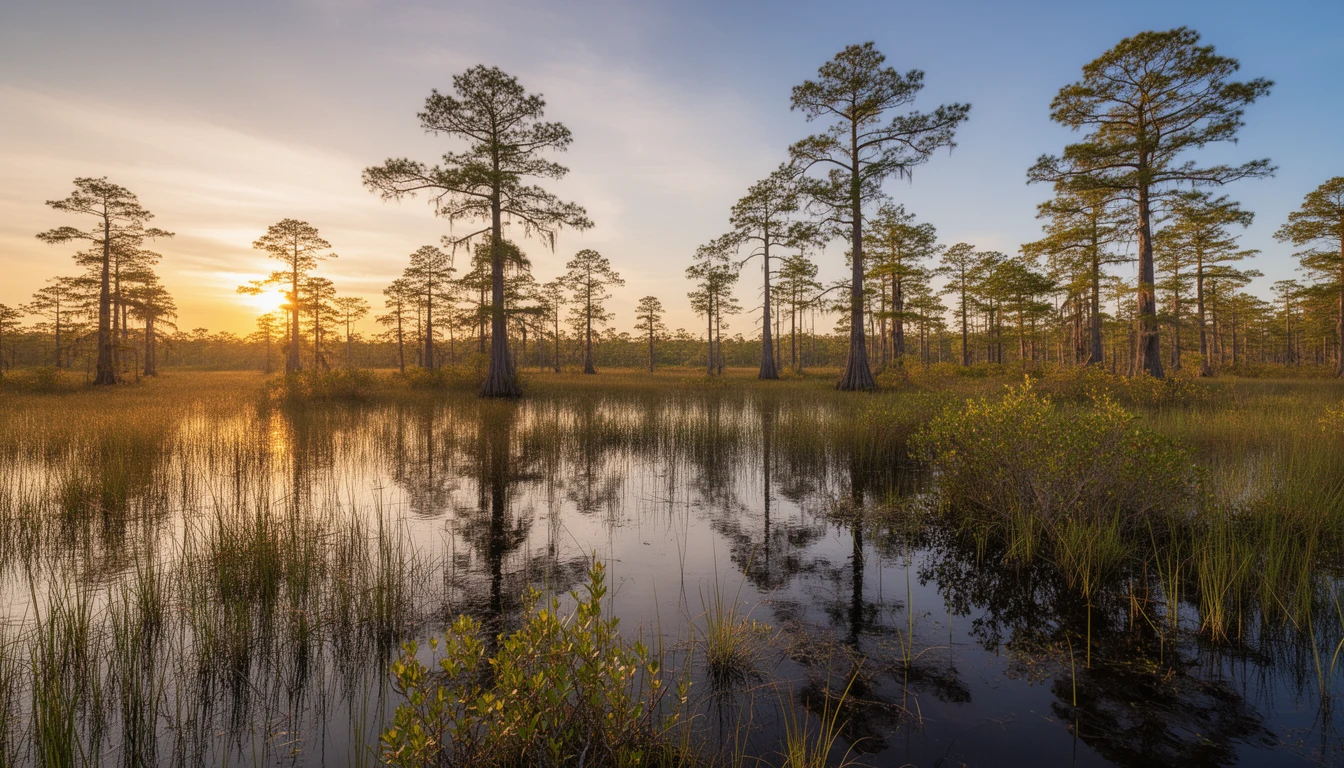
Tyrrell sits on the southern shore of the Albemarle Sound, and the county’s northern line runs out into the water. North across the sound are Perquimans and Pasquotank counties, with Camden and Currituck further east.
The Albemarle is the largest brackish or freshwater sound in North America: 60 miles long, up to 15 miles across, about 450 square miles. It has not always been fresh. Until a storm closed the Currituck Inlet in 1830, the sound carried mostly salt water, and the inlet closing cut the ocean flow and left the water as fresh as it is today. It is shallow and it is protected from the ocean by the Outer Banks, so what you deal with on the sound is weather rather than surf.
Soundfront is the rarest frontage in Tyrrell County, and the hardest to buy. Few roads run to the shore, and most of the county’s northern edge is timber, marsh, and pocosin. That is also why it stays quiet: there is no beach crowd, because there is no beach.
If you do find a sound-side parcel with legal access and buildable upland, understand what you are buying. You are buying wind exposure, a horizon that runs to the far shore, and shoreline that moves in storms. On the sound, the flood map and the storm history are not paperwork. They are the deal.
How to shop by water: four checks
Whichever water you choose, the same four questions decide whether the parcel actually works.
- The flood map. Pull the FEMA panel for the address before you get attached to the parcel. Bottomland along the Scuppernong and the marsh behind the sound both carry flood zones, and flood insurance on a structure is priced off the elevation on the certificate.
- The wetland line. Order a delineation before you plan a pier, a dock, a road, or a clearing. Filling or draining jurisdictional wetlands needs a federal permit through the U.S. Army Corps of Engineers, and a delineation turns headline acreage into the acres you can genuinely use.
- The dock permit. A pier or dock in public trust water needs a CAMA general permit from the N.C. Division of Coastal Management. Tyrrell is one of the 20 counties the Coastal Area Management Act covers, and where the water is federally navigable you should expect a Corps permit alongside it. Ask before you buy for a dock you cannot permit.
- The access. Deeded frontage or a recorded easement to the water, read in full rather than summarized. A waterfront parcel you cannot legally reach is a landlocked parcel with a nicer view.
And the unglamorous one that kills more water deals than the other four combined: the septic system. On blackwater bottomland the seasonal water table is the gate, and the district health department has the final say, not the listing agent.
The Bottom Line
Three waters, three counties inside one county line. The Scuppernong gives you a town, a boardwalk, and small-boat water. The Alligator gives you the ICW, the landings, and the wettest shoreline in the county. The Albemarle gives you the open horizon and the longest list of things to verify.
Match the water to the life you will actually live, then let the survey, the flood map, and the health department answer before your heart does. That order is the difference between buying waterfront and buying a view you can never use.
If you have a parcel in mind, I will pull the map with you and tell you plainly which of those three waters you are really buying. Call me at (252) 202-4945.