
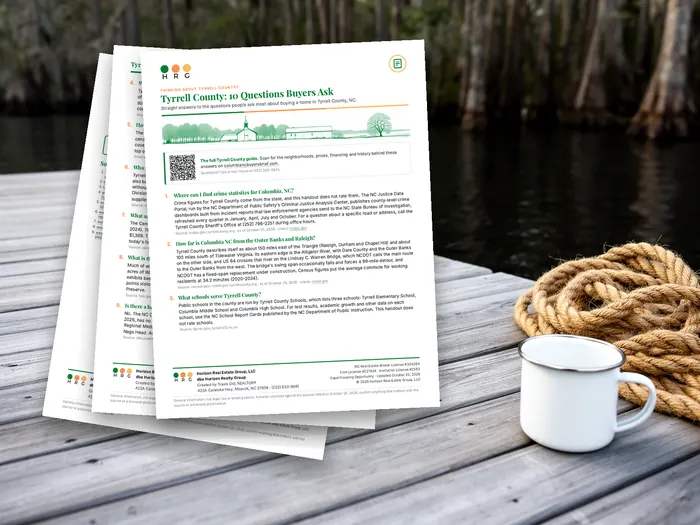
Pocosin Lakes: Living Next to 110,000 Wild Acres

In this post
Most counties measure their biggest landowner in city blocks. In Tyrrell County, the biggest presence on the map is a national wildlife refuge — and if you buy rural land here, there’s a fair chance your property sits near it, borders it, or depends on the wildlife that pours out of it. Here’s what that actually means for a buyer.
What Pocosin Lakes is
Pocosin Lakes National Wildlife Refuge covers roughly 110,106 acres across Tyrrell, Washington, and Hyde counties, with its headquarters and visitor center right in Columbia. It was established in 1990, absorbing the older Pungo National Wildlife Refuge (established 1963) as its Pungo Unit. (Refuge overview at fws.gov.)
The name comes from the landscape itself: pocosin derives from a Native American word often rendered as “swamp on a hill” — the rare peat-soil wetlands that blanket this part of the coastal plain. Dense, shrubby, spongy underfoot, and nearly impossible to walk through in places, pocosin is why this peninsula stayed wild while the rest of the East Coast filled in. The refuge exists in large part to protect and restore those peatlands, which hold enormous amounts of carbon and water.
For a landowner, the practical summary is this: the refuge is a permanent, federally owned neighbor that will never be subdivided, developed, or clear-cut into a subdivision. Whatever else changes in the market, the wild acreage next door stays wild.
The wildlife, honestly described
Black bears. The U.S. Fish and Wildlife Service describes the refuge as supporting one of the densest black bear populations ever reported, and coastal North Carolina broadly has a reputation for producing exceptionally large bears — the state-record bear, per the N.C. Wildlife Resources Commission, weighed 880 pounds and came from coastal Craven County. Eastern NC bears thrive in exactly the lowland swamps and pocosins this county is made of. If you live near the refuge, bears are not a possibility; they’re a certainty. That means bird feeders, garbage, pet food, and chicken coops need managing, and it means some of the best bear habitat in North America is functionally your back fence.
Wintering waterfowl. More than 100,000 ducks, geese, and swans winter on the refuge, with the Pungo Unit’s tundra swan and snow goose concentrations drawing wildlife photographers from across the country every winter. If you’ve never seen tens of thousands of swans lift off a lake at dawn, it rearranges your sense of what “rural North Carolina” means.
Red wolves. Handle this one with precision, because it’s remarkable: the Albemarle Peninsula hosts the world’s only wild population of red wolves. Per the USFWS Red Wolf Recovery Program, the designated Eastern North Carolina red wolf population area spans five counties — Beaufort, Dare, Hyde, Washington, and Tyrrell — centered on the Alligator River National Wildlife Refuge to our east. The species has been federally protected since 1967 and is listed as endangered; the wild population is small — recent USFWS figures count roughly two dozen known adult and subadult wolves plus pups. You are statistically unlikely to ever see one. But buying land in Tyrrell County means buying into one of the rarest wildlife recovery stories on Earth, and it’s worth knowing your county is part of it.
Add bobcats, river otters, and red-cockaded woodpeckers in the restored pocosin, and the wildlife résumé of this county outruns places with a hundred times the population.
Can you hunt the refuge?
Generally, yes — under refuge-specific regulations. Pocosin Lakes permits public hunting, and the refuge’s own activities page describes excellent deer hunting plus opportunities for quail, rabbit, squirrel, raccoon, waterfowl, and other small game, with feral hogs takeable in most areas and archery options as well. The essentials:
- Refuge hunting runs on refuge-specific seasons, zones, and permit rules layered on top of state law — always check the current-year refuge hunting regulations at fws.gov before planning anything.
- Bear and red wolf are a sharp line: red wolves are federally endangered and killing one is a serious federal offense. Coyote hunting rules in the five-county red wolf area carry special restrictions for exactly this reason — know them before you shoot.
- During deer seasons, blaze orange requirements apply to everyone away from a vehicle on the refuge, hunters or not.
For a hunting-land buyer, refuge adjacency cuts two ways, both mostly favorable: your private acreage benefits from game populations sustained by 110,000 protected acres next door, and the refuge itself gives you huntable public ground you don’t pay taxes on.
What adjacency means when you’re the buyer
The realistic ledger:
In your favor: a permanently undeveloped border; game density that private land elsewhere can’t match; guaranteed dark skies and quiet; and a landscape amenity — the boardwalk in Columbia, the winter waterfowl spectacle at Pungo — that adds real quality of life.
To plan around: wildlife pressure is not abstract — bears will test your garbage discipline, and deer will treat an unfenced garden as a buffet. Farm fields near refuge boundaries share their crops with the wildlife. And refuge land is closed to some uses adjacent owners occasionally assume are allowed — you can’t run permanent stands, ATVs, or dogs on refuge ground outside its rules, so know exactly where your boundary is.
None of this is fine print to fear. It’s the character of the place — and it’s precisely why land here looks and hunts the way it does.
Digging deeper
The Buyer’s Brief covers the ground-level implications in two chapters: hunting and recreational land for the buying strategy, and land, pocosin, and water tables for why refuge-country soil behaves the way it does. When you’re ready to look at actual tracts near all this, start with the hunting and recreational listings.
And if you’re just refuge-curious: the visitor center in Columbia is open to everyone, the boardwalk behind it is free, and a February morning at Pungo Lake will tell you more about why people fall for this county than anything I can write.
Keep reading
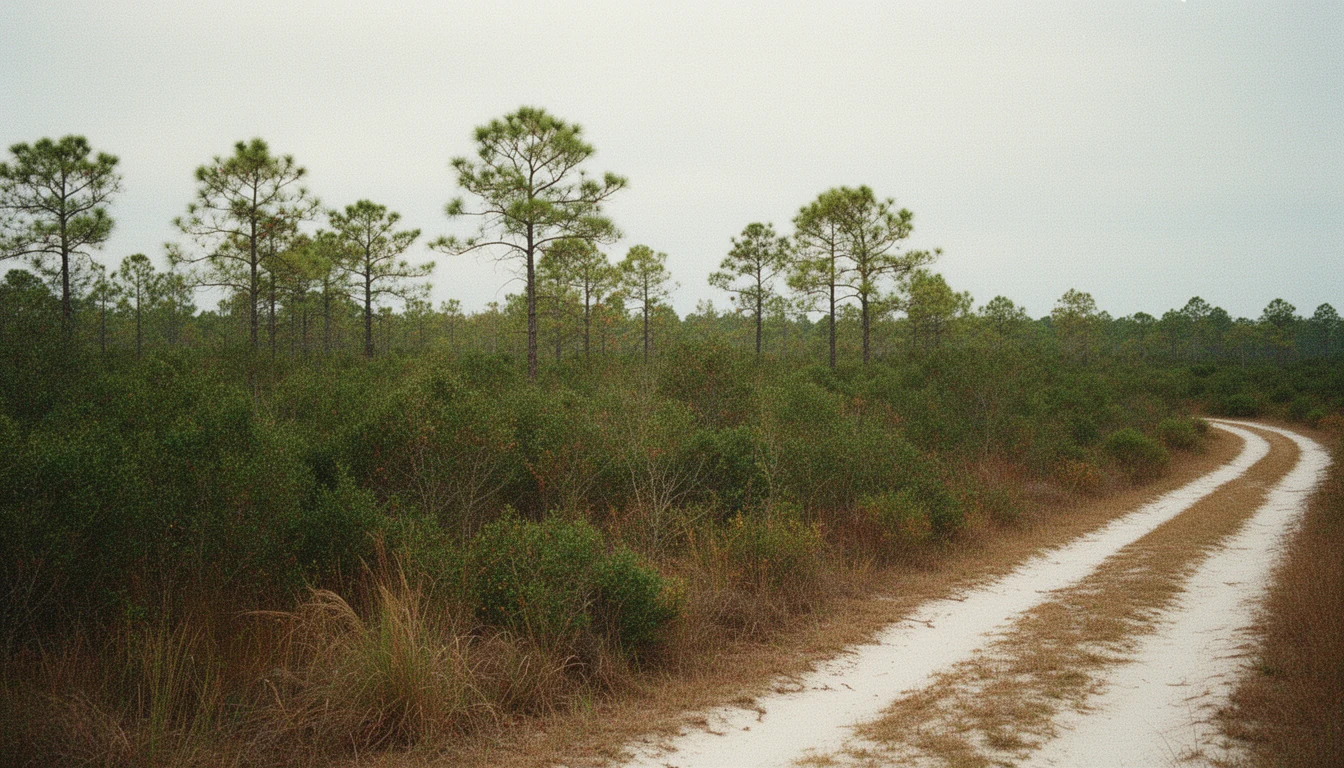
9 Questions Before Buying Beside a Tyrrell Pocosin
Nine questions to settle before buying land beside a Tyrrell County pocosin: wetland maps, outfall ditches, peat fire, floods, and recorded easements.
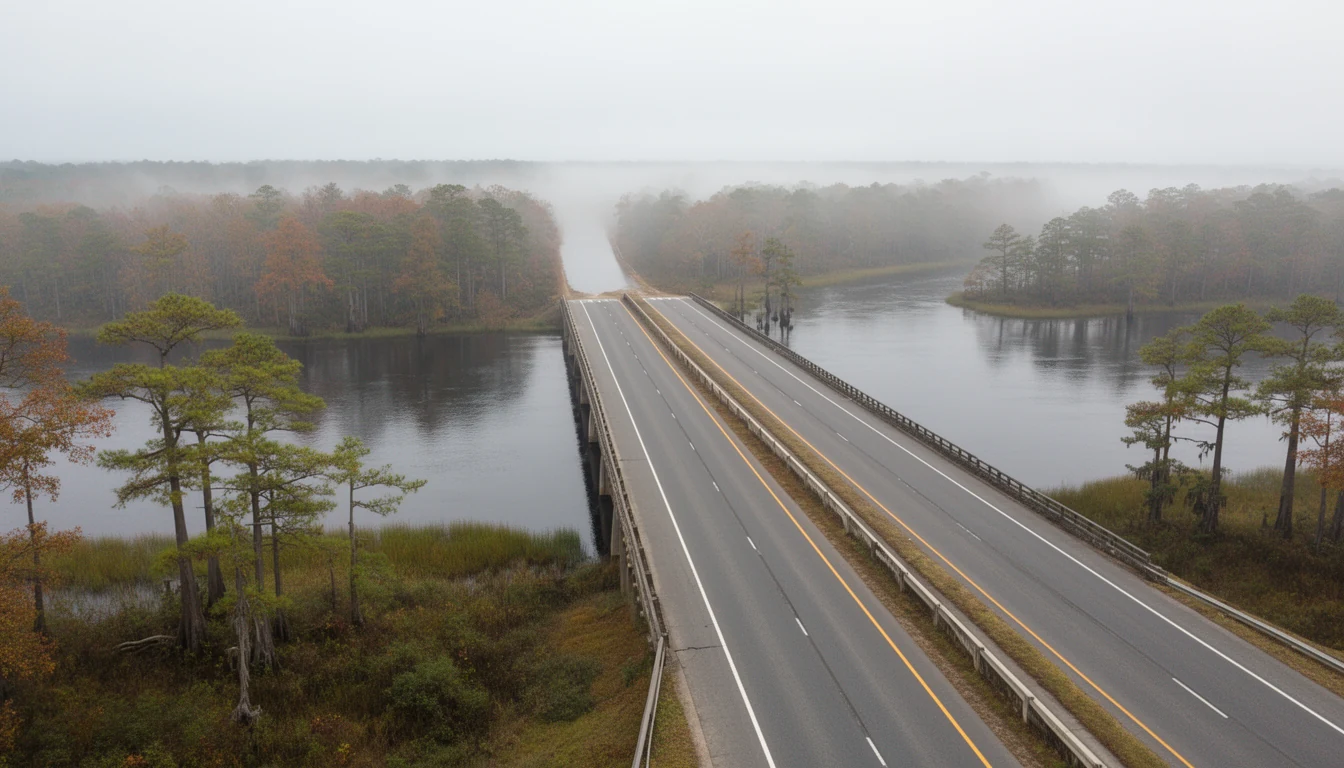
The Lindsay C. Warren Bridge: Tyrrell Turns East
The 1962 Lindsay C. Warren Bridge ended Tyrrell County's ferry era and turned it east toward the Outer Banks. What that shift means for land buyers.
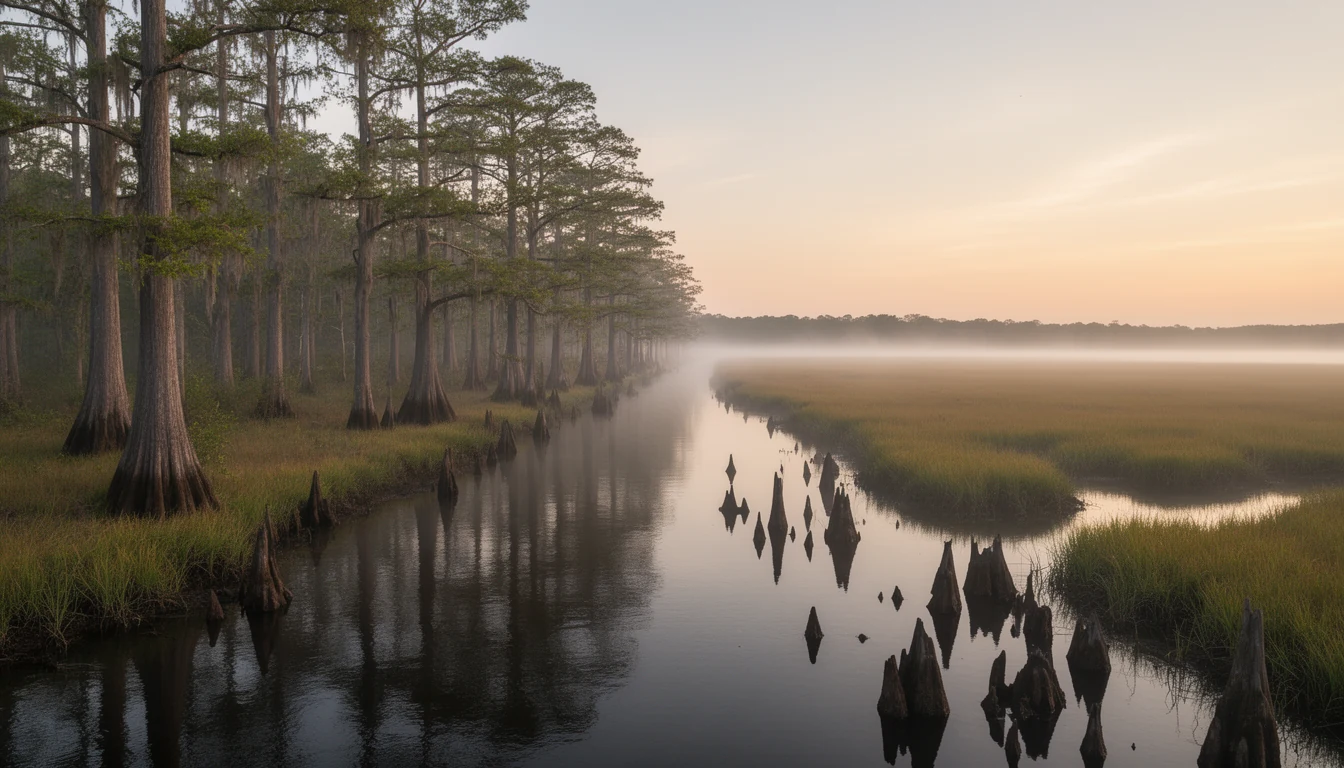
Three Waters, One County: Tyrrell's Rivers and Sound
Tyrrell County holds more than one-third water. What the Scuppernong River, the Alligator River, and the Albemarle Sound mean for land buyers.