
7 Costs of an Off-Grid Tyrrell County Build

In this post
Drive any rural route out of Columbia and you will see the same thing: cheap acreage, big sky, and a quiet that reads like a bargain. The bargain is real. What the listing will not show you is the stack of costs that sits between “we bought land” and “we moved in.”
I hold a North Carolina general contractor license in addition to my broker license, and I have priced enough builds on this side of the bridge to know where the money actually goes. Here are the seven costs nobody puts in the marketing.
1. The septic gamble
Outside the town of Columbia, there is no sewer line coming to save you. Nearly every home site in Tyrrell County lives or dies on one question: can this soil legally accept a septic system?
Permitting runs through the Martin-Tyrrell-Washington District Health Department, the three-county district whose local office sits at 408 Bridge Street in Columbia, (252) 793-1750. Buyers regularly lose weeks calling the wrong agency first.
The part that bites is the soil. Large stretches of the county sit on pocosin peat or drained farmland where the seasonal high water table runs close to the surface, and a conventional drainfield needs separation between its trenches and that water. When the soil is marginal, the district approves only an alternative system: low-pressure pipe, fill or mound, or a pretreatment unit. Those cost meaningfully more to design, install, and maintain, and some carry ongoing inspection or management agreements. Do not budget off a conventional-system number. Ask the installer to price the system the district actually approved.
2. The well, and the test that follows
Private wells run through the same district office. North Carolina law (G.S. 87-97) requires a permit before a well is drilled, the completed well gets inspected, and within 30 days of the certificate of completion the water has to be sampled and tested by a certified lab: bacterial indicators plus a panel of inorganics that includes arsenic, lead, and nitrates.
That testing is a line item, and so is the treatment equipment you may end up needing. Water treatment is common across the coastal plain, and its presence is not a red flag. You just want to know what it is treating for before you close, not after the first glass.
3. The soil scientists and the wetland line
On a big tract the question is rarely “can I build.” It is “where on these acres can I build.” A licensed soil scientist can evaluate a parcel privately alongside the district process, and if your plans involve clearing, ditching, filling, or building, a wetland delineation converts gross acres into buildable acres. On this landscape the dry, buildable subset can be a fraction of the headline acreage.
Budget a few thousand dollars for that professional work. It is the cheapest insurance in the deal. The local way of saying it: the water table does not care what the listing says.
4. The long run of wire
Rural utility service is a long run of wire through a lot of trees in a county that catches coastal storms. Outages happen, and restoration in low-density areas takes longer than suburban customers are used to.
The households that do well here plan for it: a generator, portable or standby, fuel on hand, and water stored, because a well pump without power is just a pipe. When you are pricing a build, put the generator on the list. When you are pricing the lot, ask the power provider about the service drop before you fall for the view.
5. Flood insurance and the height of your floor
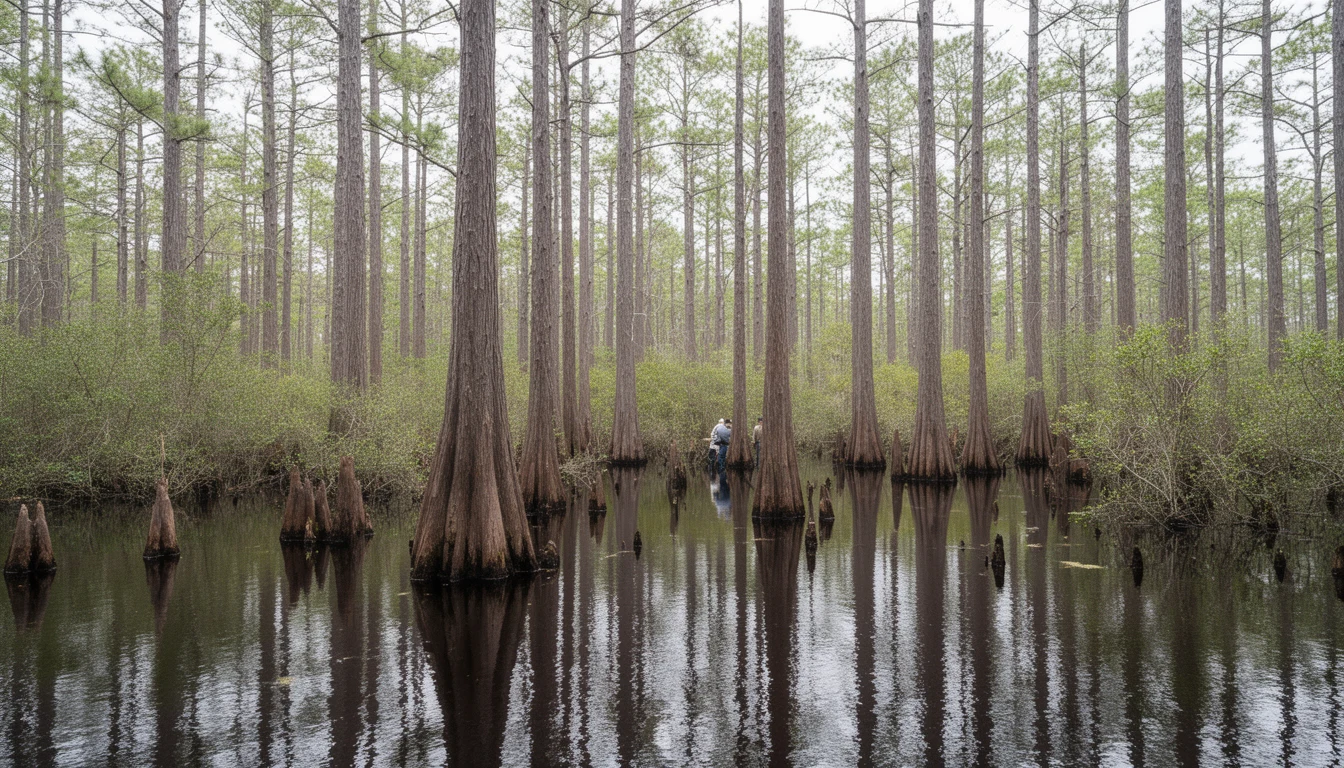
Low, flat, and near the water describes most of this county. Much of the land near the Scuppernong sits in mapped flood zones, and those maps drive insurance cost, lender requirements, and how high you build.
A house that has to be elevated, or that carries flood coverage year after year, is a different purchase than the same floor plan on high ground. Pull the FEMA panel for the parcel before you write the offer, and price the insurance into the build, because the lender will.
6. The builder travel premium
Tyrrell County is North Carolina’s least populous county: 3,245 people at the 2020 census. A county that size does not support a deep bench of homebuilders. Buyers who build here routinely bring in general contractors from neighboring counties or from the Outer Banks side of the bridge.
That means fewer bids to compare, travel time baked into every subcontractor’s day, and build timelines that run longer than they would in a metro market. None of that is a reason not to build. It is a reason to line up your builder conversation before you close on land, and to treat any timeline estimate with the skepticism a remote market deserves.
7. Connectivity, priced in from day one
Broadband has genuinely moved here. Tyrrell County has been included in the state’s GREAT grant program in multiple rounds, and Brightspeed holds awards on the books for the county. But grant announcements are not the same as service at your parcel; buildouts happen location by location over years.
Before you buy with remote work in mind, check the exact address on the FCC’s National Broadband Map and ask the seller what they actually use today. If the maps miss you, satellite service like Starlink is the standard fallback, and for a fully remote household it is worth pricing in from day one rather than treating it as a surprise.
The Bottom Line
None of these seven is a reason to cross Tyrrell County off the list. They are the reason the land is priced the way it is. You are being paid, in acreage and price per square foot, to bring some capability of your own: a generator, a freezer, a 40-minute hospital drive, and the patience to do the soil work before the build. Buyers who run the water diligence first buy well here. Buyers who skip it buy acreage they cannot use.
None of it is unknowable. Soil maps, water tables, easements, and delineations are all facts you can establish during a properly negotiated due diligence period. The Buyer’s Brief walks through all of it: the soil and water chapter, the wells, septic, and building chapter, and the services and self-sufficiency chapter. Read those three, and you will know what you are paying for before you write an offer.
If you have a parcel in mind, I will walk it with you and tell you plainly which of these costs apply to that piece of ground. That conversation costs nothing, and it usually saves buyers months.
Keep reading
9 Questions Before Buying Beside a Tyrrell Pocosin
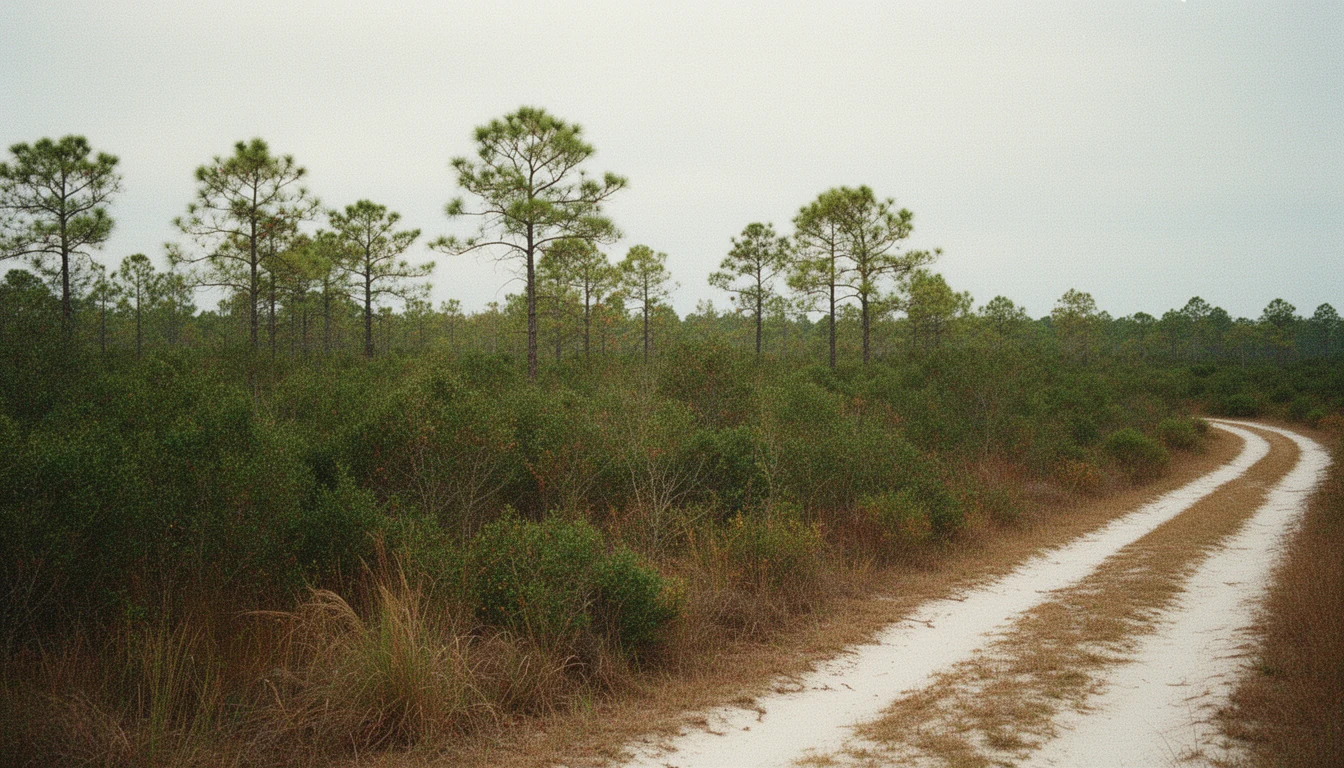
Nine questions to settle before buying land beside a Tyrrell County pocosin: wetland maps, outfall ditches, peat fire, floods, and recorded easements.
Three Waters, One County: Tyrrell's Rivers and Sound
Tyrrell County holds more than one-third water. What the Scuppernong River, the Alligator River, and the Albemarle Sound mean for land buyers.
Tyrrell County Contracts: The Risk After You Sign
A 2022 NC Supreme Court ruling confirmed buyers who breach a purchase contract can owe attorney's fees. What that means for Columbia and Tyrrell County.